courtroom animation

courtroom animation

Television animation gained significant popularity during the 1950s, coinciding with the widespread adoption of television sets in most advanced nations. Primarily targeted towards children, animated cartoons were conveniently scheduled and Saturday mornings often saw American youngsters devoting numerous hours to watching these shows. Numerous timeless animated shows experienced a revival on television, with the production of new animated cartoons transitioning from theatrical releases to television series by the late 1950s. Hanna-Barbera Productions stood out as a remarkably productive studio during this period, achieving immense success with notable series including The Flintstones (1960-1966), which became the first ever animated prime time series, Scooby-Doo (since 1969), and the Belgian co-production The Smurfs (1981-1989). The limitations imposed by American television programming, combined with the need to produce a large volume of content, led to the adoption of cost-effective and expedited techniques for limited animation, paired with increasingly formulaic scripts. As a result, the overall quality declined until the emergence of more audacious animation in the late 1980s and early 1990s. This revitalization of American animation was characterized by successful shows like the pioneering cartoon series, The Simpsons (1987), along with subsequent animated television programs such as The Simpsons (since 1989) and SpongeBob SquarePants (since 1999).

Animators breathe life into the narrative by positioning characters to perform actions in every scene. They begin by deconstructing an action into a sequence of significant poses known as key frames, which delineate crucial positions. Afterwards, a computer program is employed to depict the object's motion between those key frames in order to effectively communicate the intended emotions through the resulting animation.

During this phase of the production process, animators manipulate the characters to enact every scene. Giulia's physical movements and facial gestures effectively communicate her unique traits and emotional states.

In the realm of animation, full animation refers to the method of creating visually captivating films through the utilization of intricate illustrations and lifelike motion, resulting in seamless animation. This artistic approach allows for a range of styles, from the lifelike animations showcased by Walt Disney (The Little Mermaid, Beauty and the Beast, Aladdin, The Lion King) to the more exaggerated and whimsical aesthetics synonymous with Warner Bros. productions. An animation production company. A number of the Disney animated films serve as illustrations of complete animation, just like non-Disney productions such as The Secret of NIMH (US, 1982), The Iron Giant (US, 1999), and Nocturna (Spain, 2007). In the realm of fully animated films, it is common practice to animate them using either a two-frame or one-frame approach. This essentially implies that a minimum of 12 and up to 24 drawings are necessary to compose a single second of footage.

Similar to other types of media, animation has established accolades to recognize outstanding achievements in the industry. Several of these awards are integrated within broader or localized film award ceremonies, such as China's Golden Rooster Award for Best Animation which has been presented since 1981. ASIFA-Hollywood's Annie Awards, the Emile Awards in Europe, and the Anima Mundi awards in Brazil are among the numerous awards programs that focus on animation and feature a wide range of categories.

Animation can also encompass the motion of image components through basic machinery, such as the shifting of images in magic lantern presentations. The historical practice of manipulating three-dimensional puppets and objects to imitate living entities through mechanical means is closely tied to animation as well. Disney popularized the concept of electronic automata by introducing animatronics.

Trial Graphics

Stop motion refers to the technique of animation wherein physical objects are manipulated in the real world and captured in single frames of film, thereby giving the impression of motion when played back. There exist various forms of stop-motion animation, typically named after the materials employed in crafting the animation. There is a wide availability of computer software that enables the creation of this particular form of animation. On the other hand, traditional stop-motion animation tends to be less costly but more time-intensive to produce compared to modern computer animation.

Limited animation is characterized by the utilization of simpler or stylized illustrations and techniques for motion, often resulting in an erratic or jerky animated effect. This style of animation employs a reduced number of drawings per second, intentionally restricting the smoothness of the animation. This technique is a cost-effective alternative. Originating from the creative minds at the American studio United Productions of America, limited animation can serve as a means of achieving stylized artistic representation, as seen in films like Gerald McBoing-Boing (US, 1951), Yellow Submarine (UK, 1968), and select anime productions from Japan. Nevertheless, its predominant application has been in generating economical animated material for television media (such as the creations of Hanna-Barbera, Filmation, and other studios dedicated to TV animation), and subsequently for the internet (web cartoons).

During the 1890s, cinematography emerged as a ground-breaking development, with its remarkable portrayal of realistic elements being hailed as its primary achievement. However, it took a significant amount of time before animation made its way into theaters. The renowned film The Haunted Hotel (1907) directed by J. Stuart Blackton brought widespread attention to stop-motion animation and is said to have served as inspiration for Émile Cohl in the creation of Fantasmagorie (1908), which is widely recognized as the earliest existing example of a full traditional animation created by hand on standard cinematic film. Ladislas Starevich's puppet animations, dating back to 1910, and Winsor McCay's meticulous hand-drawn animations in films like Little Nemo (1911) and Gertie the Dinosaur (1914), stand out as noteworthy artistic endeavors that have exerted considerable influence in the realm of short films.
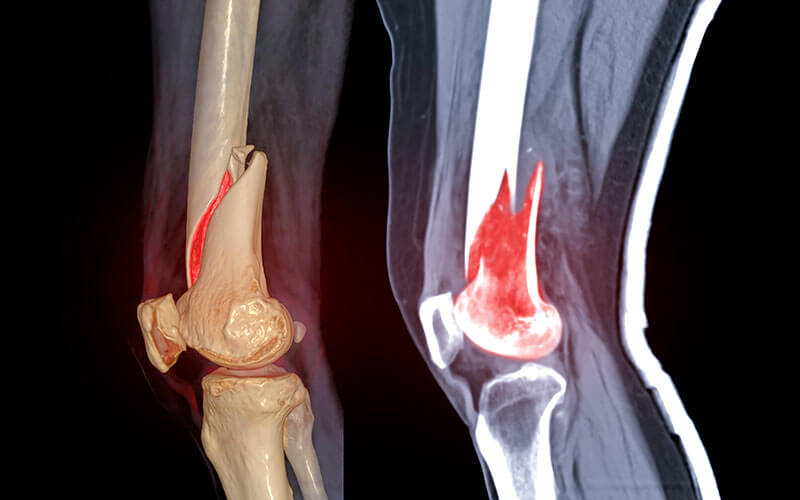
Trial Graphics

Forensic Animation

The term animation derives from the Latin word animātiōn, which is derived from animātiō, denoting the act of imparting life. The original interpretation of the English term pertains to vivacity and has existed for a significantly longer period compared to its association with the medium of moving images.

Pixel images, such as JPG, GIF, and BMP, which have familiar formats, are unable to be resized without impacting the quality of the image. Resolution is not a concern when it comes to vector graphics. Vectors are defined by paths that include different starting and ending points, as well as lines connecting these points to construct the graphic. Shapes have the ability to be arranged in order to construct a character or any other visual representation. Presented below is an illustration for reference.

Within the realm of traditional animation, examples of 2D animation can be found in early Disney films such as Pinocchio and Beauty and the Beast. However, an alternative form known as Vector-based animation exists that allows for a 2D aesthetic without adhering to traditional methods.

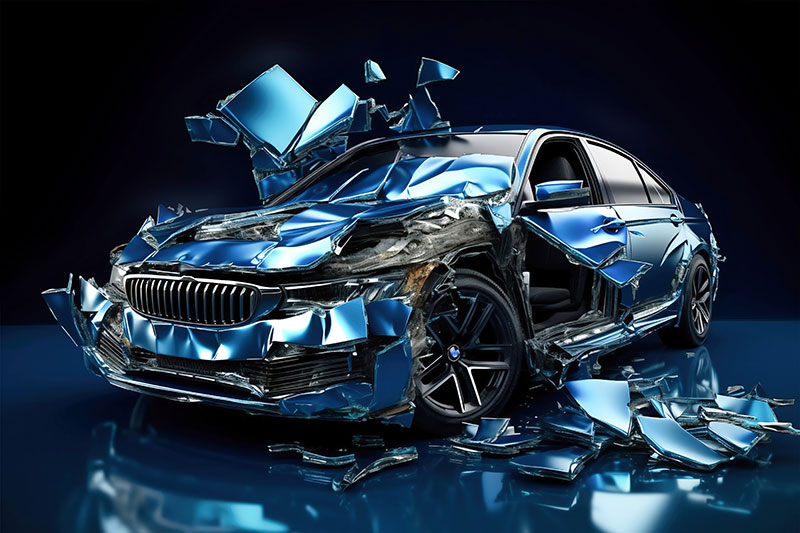
3D accident reconstructions

Computer-generated animation has the ability to capture intricate details through the implementation of three-dimensional visuals. On the other hand, two-dimensional computer animation, which can emulate the appearance of traditional animation, is often employed for aesthetic purposes, conserving bandwidth, or achieving quicker real-time renderings. Additionally, various conventional animation techniques involve stop motion methodologies wherein objects crafted from paper cutouts, puppets, or clay figures are utilized in two- and three-dimensional forms.

In classical animation, illustrations are meticulously sketched or painted on transparent sheets of celluloid for the purpose of being captured through photography. This technique was commonly employed in early animated films; however, contemporary animated movies predominantly rely on computer-generated imagery or CGI.

In 1955, Disneyland was established, showcasing a multitude of attractions inspired by Disney's animated characters. Its remarkable triumph led to the development of numerous additional Disney theme parks and resorts. Disney has frequently experienced higher earnings from their theme parks in comparison to their film ventures.

3D accident reconstructions
Legal Animation

A significant distinction lies in the fact that during the production phase, animated films necessitate a higher marginal cost for each additional shot compared to live-action films. In live-action filmmaking, it is relatively simple for a director to request another take during principal photography; however, in animation, every take must be meticulously rendered by animators manually (although advancements in computer animation have somewhat mitigated the tedium involved in rendering slightly different takes). Animation studios, such as Disney, recognized the futility of investing vast resources in employing numerous animators who spend extensive periods crafting visually stunning five-minute sequences that lack a proper plot progression. Consequently, they initiated the practice of establishing story departments in the 1930s. These departments employ storyboard artists who meticulously develop each scene through storyboards. Only after ensuring the coherence and significance of all scenes as a collective entity do they entrust the film to the animators. In contrast to animated films, which adhere more strictly to storyboards, live-action films possess greater freedom to deviate from the storyboard and engage in real-time improvisation.

Around the year 2010, it was approximated that the animation industry had a value of about US$80 billion. However, by 2020, this worth had risen significantly to an estimated US$270 billion. Between 2004 and 2013, animated feature-length films demonstrated the highest profit margins (approximately 52%) compared to other genres within the film industry. As of the early 2020s, animation as both an art form and a business continues to flourish.

While Disney's films remained unparalleled in terms of success, various nations established their own animation industries which produced a diverse range of short and full-length theatrical animations, often incorporating stop motion and cutout animation techniques. For instance, Russia's Soyuzmultfilm animation studio, established in 1936, maintained an average production rate of 20 films per year, including shorts, and by the year 2018 had amassed a total of 1,582 titles. Besides Japan, other countries such as China, Czechoslovakia / Czech Republic, Italy, France, and Belgium also occasionally released feature films. Japan, on the other hand, emerged as a dominant force in animation production, developing its own distinctive and influential anime style characterized by effective limited animation.

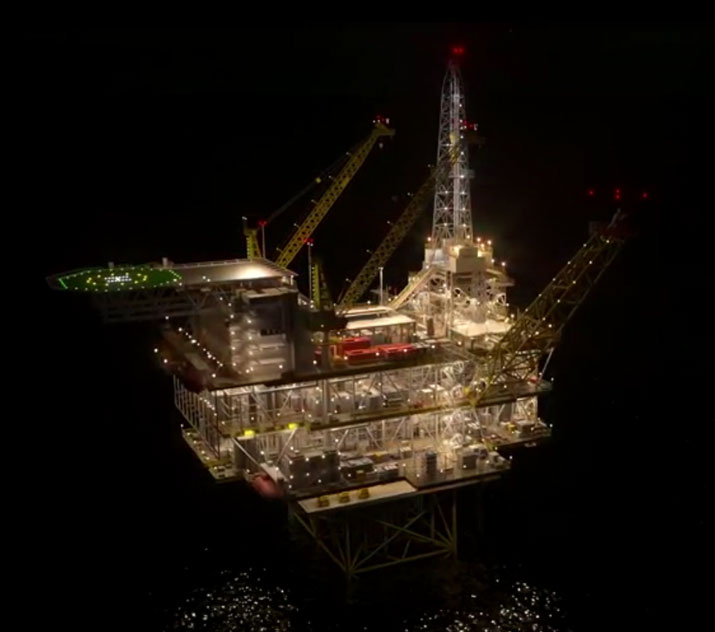
oil & gas animation

The perception of animation, commonly observed in motion pictures, has historically been credited to the persistence of vision and subsequently to the phi phenomenon and beta movement. However, the precise neurological factors responsible for this illusion remain unclear. The stroboscopic effect characterizes the impression of movement induced by swiftly alternating images, featuring subtle discrepancies and imperceptible intervals. In the past, animators would manually depict every aspect of character movements and transformations on transparent cels, which could then be manipulated against a separate background. However, computer animation typically relies on programming paths that connect key frames, enabling digital figures to navigate through a computer-generated environment.

Feel free to delve further into the possibilities offered by Pixar in a Box, a series of educational materials created jointly by Pixar and Khan Academy. To access a lesson specifically focused on Animation, simply click on the provided link.

Centuries prior to the inception of contemporary animation, individuals across the globe were enthralled by the enchantment of animated figures. Throughout history, skilled artisans and creators have breathed life into marionettes, mechanical creatures, silhouettes, and astonishing illuminated devices, evoking the sense of wonder through tangible manipulations.

oil & gas animation

Frequently Asked Questions

LawFX�s services help legal professionals by providing clear, visual representations of complex legal scenarios, enhancing comprehension for juries and judges, and aiding in presenting cases more effectively.

LawFX employs a team of experts who use the latest technology to craft meticulous and scientifically accurate visual aids, ensuring every nuance of a case is accurately represented.

LawFX focuses on creating scientifically accurate and detailed animations. However, the admissibility of animations in court depends on the specific legal standards and requirements of the jurisdiction.